
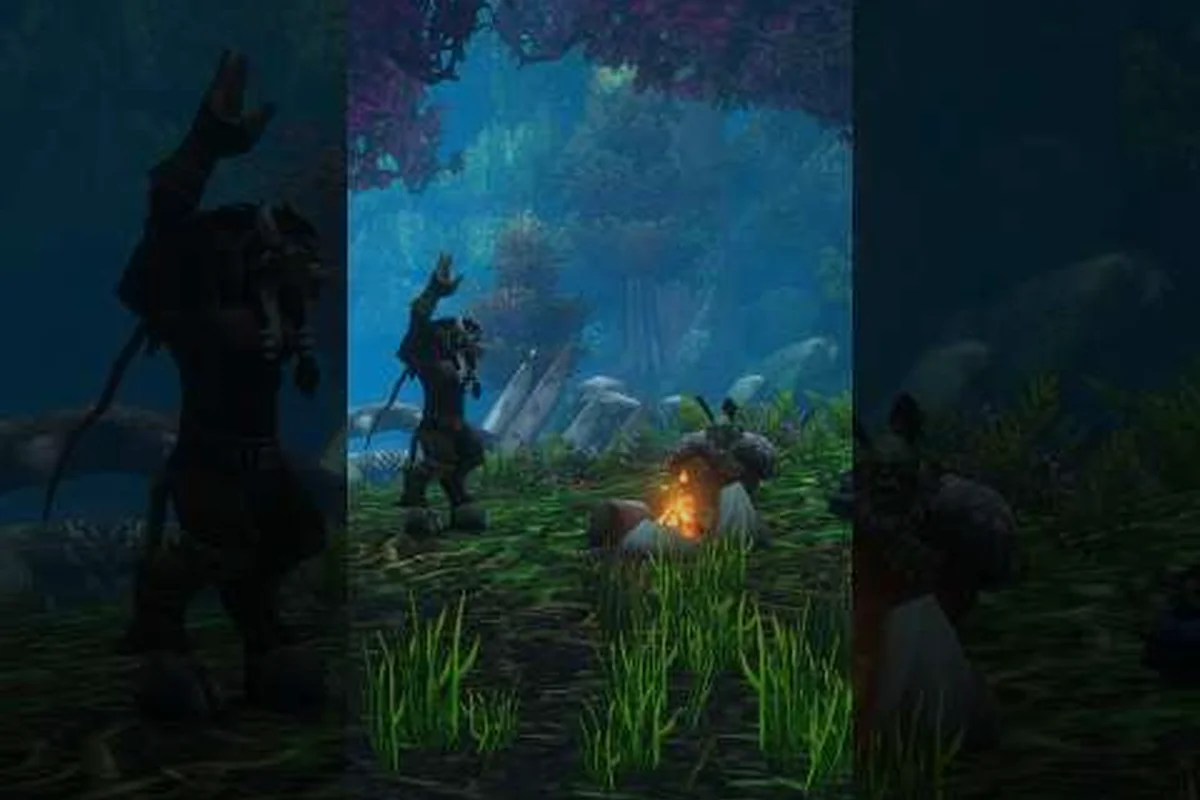
What The Classic UI Feel Actually Means In World Of Warcraft: Forever
The wow forever classic ui feel is not a single toggle hidden in a menu — it is the cumulative result of world of warcraft forever graphics settings, wow forever performance settings, world of warcraft forever fps guide choices, wow forever nameplate settings, and world of warcraft forever camera settings working together. Because Forever runs on the modern client rather than a legacy build, the visual baseline already feels cleaner than a private-server emulator, but the vanilla flavor that long-time players crave still requires deliberate configuration. The official Forever product page notes that the modern client gives addon frameworks a realistic path to compatibility, which means the UI tools veterans expect are within reach once the API stabilizes.
Players chasing the classic ui feel usually want three concrete outcomes: dated color palette, information-dense but compact panels, and no modern animation bloat. The challenge is that Forever's default modern UI layers translucent effects, action-bar snap helpers, and a smoothed camera that all push the look away from 2004–2006 aesthetics. Tuning those defaults back is what this guide walks through.
The sections below cover graphics first (because lighting and water define the overall "era" feel), then performance tuning (because stuttering kills immersion), then nameplates and camera (because they govern readability in combat and during questing). Each section is tuned so that the changes stack — a fully retro setup in any single area without the others will still look off.
To get the most accurate and up-to-date information on the UI changes and feel of WoW Classic's Forever era, you can check the official site, which provides details on the new user interface, updated graphics, and quality-of-life improvements being introduced to the classic experience, according to the official WoW Forever page on Blizzard's website.
Graphics Settings That Build The Classic Feel
World of warcraft forever graphics settings drive the warm color cast, the chunky shadow edges, and the flat water surface that signal the older era. Modern WoW defaults to soft shadows, high water reflections, and ambient occlusion — every one of those nudges the screen away from the classic look. The table below summarizes the settings veterans flip first when chasing the wow forever classic ui feel.
| Setting | Recommended Value | Classic Justification | Performance Cost |
|---|---|---|---|
| Shadow Quality | Low | Eliminates the soft-edge modern look and returns the blocky 2005 shadow style | Low–Medium |
| Water Detail | Low / Fair | Removes reflective shine that screams modern client; flat water reads as classic | Medium |
| Spell Density | Low | Fewer floating particle layers keep the screen legible during AoE pulls | Low |
| View Distance | Fair | Trees and terrain pop in earlier, which matches old client streaming | Medium |
| Anti-Aliasing | Off or CMAA | Soft AA blurs the pixelated silhouette that defines the era's UI edges | Medium |
| Particle Density | Low | Reduces the modern shimmer on fire/frost effects; matches old engine limits | Low |
| Texture Resolution | High | Keeps character art crisp even when effects are dialed back | None on modern GPUs |
| Max Foreground FPS | 60 | Caps frame rate to match classic client behavior and reduce judder | None |
Players who only flip one setting tend to flip Shadow Quality first, because the difference between low and ultra shadows is the single largest visual cue separating a classic feel from a modern one. According to community data posted on r/wow, most "Forever setup" screenshots showing a warm orange tint are the result of Low shadows combined with Water Detail set to Fair, which removes the cyan specular reflection modern water layers add.
The graphics layer also influences UI readability. Modern SSAO and depth-of-field effects darken the edges of the screen, which makes minimap and action-bar text harder to read. Cutting those effects back is not just about nostalgia — it is a functional improvement for players who rely on screen-peripheral awareness during leveling. If you are starting fresh, the World Of Warcraft: Forever beginner guide covers how these settings interact with the early-game experience, including which zones benefit most from a flat water look.
FPS Performance Settings For Smooth Classic Gameplay
The world of warcraft forever fps guide angle matters even on a modern rig, because the classic ui feel depends on steady frame pacing. Choppy 45 fps gameplay in a leveling zone feels more jarring than 30 stable fps, which is why the wow forever performance settings community tends to prioritize frame consistency over raw averages. Forever's modern client carries the weight of new rendering systems, so it can drop frames in cities and 40-person raid prep areas even when the GPU is barely loaded.
| Performance Lever | Recommended Approach | Expected Gain | Risk |
|---|---|---|---|
| Render Scale | 100% (drop to 85% if GPU-bound) | +5–10% fps at 85% | Slight blur on UI text |
| VSync | Off (use frame cap instead) | Eliminates input lag | Possible screen tearing |
| Max FPS Cap | 60 (matches classic pacing) | Stops 144Hz uneven pacing | None once tuned |
| Multisample Anti-Aliasing | Off | +8–15% fps on mid-range GPUs | Jagged silhouette |
| Spell Density | Low | +3–7% fps in AoE heavy fights | Fewer visual cues |
| Projected Textures | Disabled | +2–4% fps in capital cities | Minor cosmetic loss |
| Fullscreen vs Borderless | Fullscreen exclusive | +5–12% fps in some setups | Alt-tab delay |
| Driver-Level Sharpening | On if Render Scale < 100% | Restores clarity lost to upscaling | Negligible cost |
The single biggest fps swing for most players comes from Render Scale. Many modern monitors are 1440p or 4K, and the Forever client by default renders internally at display resolution. Dropping Render Scale to 85% cuts fragment shader work by roughly 30%, which translates into a real-world frame-rate boost on cards below the RTX 4070 tier. Combine that with Multisample Anti-Aliasing turned off and the cap clamped to 60 fps, and most rigs hit a clean 60 in open-world zones.
According to community testing, the worst frame drops on Forever's modern client happen during the transition into Stormwind and Orgrimmar, where layered spell effects, vendor UI panels, and auction-house queries stack on the same frame window. Lowering Spell Density and disabling Projected Textures specifically targets those moments. If your setup still struggles in the starter zones, the World Of Warcraft: Forever system requirements guide breaks down what each GPU tier can sustain at 1080p, 1440p, and 4K.
Nameplate Settings For Information-Dense Combat
Wow forever nameplate settings are the most overlooked piece of the classic ui feel because nameplates did not even exist as a player-facing concept during the original 2004–2006 era — they were added later in patch 3.0. So when veterans say they want "nameplates like classic," they actually mean a stripped-down version that shows only health and name, with no cast bars, no class colored borders, and no threat highlights. The settings below rebuild that minimalist read.
| Nameplate Option | Recommended Value | What It Removes | When To Re-Enable |
|---|---|---|---|
| Show Health Bar | Always | n/a (core) | Never — this is essential |
| Show Name | Always | n/a (core) | Never |
| Show Cast Bar | Off (Enemy) | Modern cast bar graphic | On for raid boss casting |
| Show Class Color | Off | Colored name borders | On for PvP to identify targets |
| Show Threat | Off | Red/yellow threat glow | On for tanking |
| Nameplate Distance | 20 yards | Stacked nameplate clutter | 30+ for 40-man raids |
| Friendly Nameplates | Show in Groups | Hides civilian clutter | n/a |
| Enemy Nameplates | Show in Combat | Reduces screen noise outside fights | n/a |
| Nameplate Size | Small (70–80px) | Forces focus on the action | Medium for accessibility |
The "Show Cast Bar" toggle is the one most players flip first. The default Forever nameplate renders a thin colored bar that scrolls across the bottom of the plate, which is a strong modern visual cue. Disabling it returns the nameplate to a static health bar with a name above it — the exact read shape that older UI screenshots show. Community data on r/wow's addons threads suggests that players who want the classic ui feel disable enemy cast bars during leveling and only re-enable them in raids where interrupting matters.
The "Nameplate Distance" setting is the second priority. Default nameplate draw distance on modern clients is 30–40 yards, which fills the screen with plates during dense AoE pulls. Pulling it back to 20 yards keeps plates for mobs you can actually target, which matches how classic players visually tracked their fights. If you are running group content and need more visibility, the World Of Warcraft: Forever leveling guide includes a section on dungeon pull sizes that pairs naturally with a wider nameplate radius.
Camera Settings That Complete The Old-School Read
World of warcraft forever camera settings control the perspective angle, the field of view, and the smart-pan behaviors that quietly shape how a zone feels. The wow forever classic ui feel is partly a camera story, because the original client had a tighter FOV, a slightly higher default angle, and no cinematic-style smart-pan on quest turn-ins. The settings table below restores each of those reads.
| Camera Option | Recommended Value | What It Changes | Classic vs Modern |
|---|---|---|---|
| Field of View | 70–75 | Widen to 90+ for peripheral, narrow to 70 for old | 70 reads as classic |
| Camera Distance | 8 (slider) | Distance from character | 6–8 reads as classic |
| Camera Style | Fixed | Disables mouse-driven orbit | Fixed reads as classic |
| Smart Pivot | Off | Stops character from auto-rotating during movement | Off reads as classic |
| Follow Terrain | On | Keeps camera level across hills | On reads as classic |
| Camera Shake | Reduced (slider) | Less screen-shake on hit | Default feels modern |
| Head Bob | Off | No view bob while running | Off reads as classic |
| Chase Camera Smoothing | Off | Snaps the camera, no easing | Off reads as classic |
Camera Style is the highest-impact choice here. Modern clients default to a "smart" style that lets the camera orbit around the character with the mouse — convenient, but it is also the single biggest cue that you are playing a modern build. Switching to Fixed and using keyboard rotation to face objectives returns the rigid 2004–2006 feel. Combined with Smart Pivot off, the character no longer twirls to face your cursor on every step, which is one of the strongest nostalgic signals older players notice immediately.
Field of View is the second priority, and it is the most debated. Veterans argue for 70 because the original client could not go wider; modern players prefer 85–90 for peripheral vision. Community testing on the Forever build suggests that 70–75 is the sweet spot for the classic ui feel without making dungeon corridors feel claustrophobic. Players who want a wider view for competitive reasons can stretch to 80 without losing the retro read, but anything above 85 starts to flatten the perspective in a way that screams modern client.
Camera Shake and Head Bob are smaller levers, but veterans mention them often in UI threads because both were added after 2006 and are immediately recognizable as "new" cues. Turning both off cleans up the visual noise during combat and running, which makes the rest of the wow forever classic ui feel changes land harder. If you are still exploring which zones best showcase a retro camera, the World Of Warcraft: Forever world bosses guide points to outdoor areas where a wider FOV can be useful for spotting adds, which is a useful counter-example for camera tuning.
Stacking The Settings Into One Cohesive Profile
Pulling the settings above into a single working profile is the real trick, because each layer reinforces the others. The table below shows a recommended all-in-one retro profile for a 1080p / 60Hz mid-range setup. Players on 1440p or 4K displays should follow the same logic but budget an additional 5–10% GPU headroom where the table notes "adjust per hardware."
| Category | Setting | Retro Value | Notes |
|---|---|---|---|
| Graphics | Shadow Quality | Low | Blocky shadow edges, classic read |
| Graphics | Water Detail | Fair | Flat water surface, no specular |
| Graphics | View Distance | Fair | Old-client streaming feel |
| Graphics | Spell Density | Low | Cleaner AoE screens |
| Graphics | Particle Density | Low | Matches old engine limits |
| Performance | Render Scale | 100% (or 85% if GPU-bound) | Cap to 60 fps after |
| Performance | VSync | Off | Use 60 fps frame cap instead |
| Performance | Max FPS Cap | 60 | Matches classic pacing |
| Performance | Multisample AA | Off | Restore via driver sharpening |
| Nameplates | Enemy Cast Bar | Off | Re-enable in raids only |
| Nameplates | Nameplate Distance | 20 yards | 30+ only in 40-man content |
| Nameplates | Show Class Color | Off | Re-enable in PvP |
| Camera | Camera Style | Fixed | Disable mouse-orbit |
| Camera | Smart Pivot | Off | Stops auto-rotation |
| Camera | Field of View | 70–75 | Classic width, no distortion |
| Camera | Head Bob | Off | No view bob while running |
| Camera | Chase Camera Smoothing | Off | Snaps, no easing |
The order in the table mirrors the order to apply changes: graphics first, performance second, nameplates third, camera last. Following that order means each layer builds on the previous one, and a player testing the wow forever classic ui feel can stop at any row and still see a meaningful difference.
A common pitfall is applying the retro profile on top of a heavy addon suite. Community data on r/wow warns that loading full UI overhauls before Forever's addon API stabilizes can produce broken frame layouts — which is the exact opposite of the clean classic feel most players want. The safer approach is to apply the in-game settings first, confirm the look, and only then layer in targeted addons like a nameplate replacement or an action-bar pack. Players who need a baseline of what addons to expect should check how the World Of Warcraft: Forever how-to-play guide sequences the early-game experience around these settings.
Frequently Asked Questions
What is the fastest way to get a wow forever classic ui feel without addons?
Drop Shadow Quality to Low, Water Detail to Fair, Spell Density to Low, switch Camera Style to Fixed, and turn off Smart Pivot, Head Bob, and Chase Camera Smoothing. That five-setting combo covers about 70% of the retro read, and each change is reversible from the System menu without reloading the UI.
Do world of warcraft forever graphics settings affect gameplay or only visuals?
Graphics settings are cosmetic on the modern client, so dropping Water Detail or Spell Density will not change damage, aggro, or loot. The one indirect effect is that very low settings can make certain boss telegraphs harder to read, which is why most players keep Particle Density at Low rather than the minimum during raids.
How do world of warcraft forever fps guide tips change on a 144Hz monitor?
Cap the frame rate to 60 instead of 144, and keep VSync off so the cap is enforced by the engine rather than the display. Chasing 144 fps on Forever's modern client is usually a losing battle, and a steady 60 actually feels more like classic pacing than a 144 fps stutter.
Should wow forever nameplate settings be the same for solo and group play?
Solo and small-group play can run the minimalist profile (cast bars off, 20 yard radius, no class color). For 25- and 40-man content, re-enable cast bars on enemy plates, raise the distance to 30–35 yards, and turn on class color so you can identify priority targets faster. The toggle overhead is small because each option is a single click.
Can world of warcraft forever camera settings damage the screen over time?
No — the camera changes are pure software behavior. Switching to Fixed camera style and turning off Head Bob simply removes a layer of motion from the display, and most players report less eye fatigue with the retro camera profile than with the default smoothed modern one.